Chevron-Shaped Structure Above the Entrance Into the Great Pyramid
The Great Pyramid of Giza is often described as eternal—unchanging, immovable, fixed in time. When you look closely at the Chevron-shaped structure above the original entrance into the Great Pyramid across centuries of sketches, photographs, postcards, and now our own modern images, a different story emerges. The pyramid endures, but the way we see it does not. What we see today is not what travelers saw in the 1800s, nor what early photographers captured, nor even what I saw just two years ago.
A Changing View Across Time
Over the years, I’ve gathered a visual archive of the original entrance to the Great Pyramid and will share some of the treasure trove with you. There are photographs from 1867 to 1977 many preserved in the Library of Congress, along with my own images from Starseed Egypt Adventure 2022 and 2024. When placed side by side, these images reveal a changing monument in plain sight: the north face of the Great Pyramid has been reshaped by excavation, conservation, tourism and by time itself.
This is not just visual story of that transformation. It is a story about how we meet the ancient world, and how the meeting changes.
The Only Chevron‑Shaped Structure Above an Ancient Entrance
High on the north face of the Great Pyramid appears a chevron‑shaped relieving structure, framed by two sets of massive inverted‑V limestone blocks, and beneath it, the true ancient entryway into the pyramid, as the original architects has intended it.
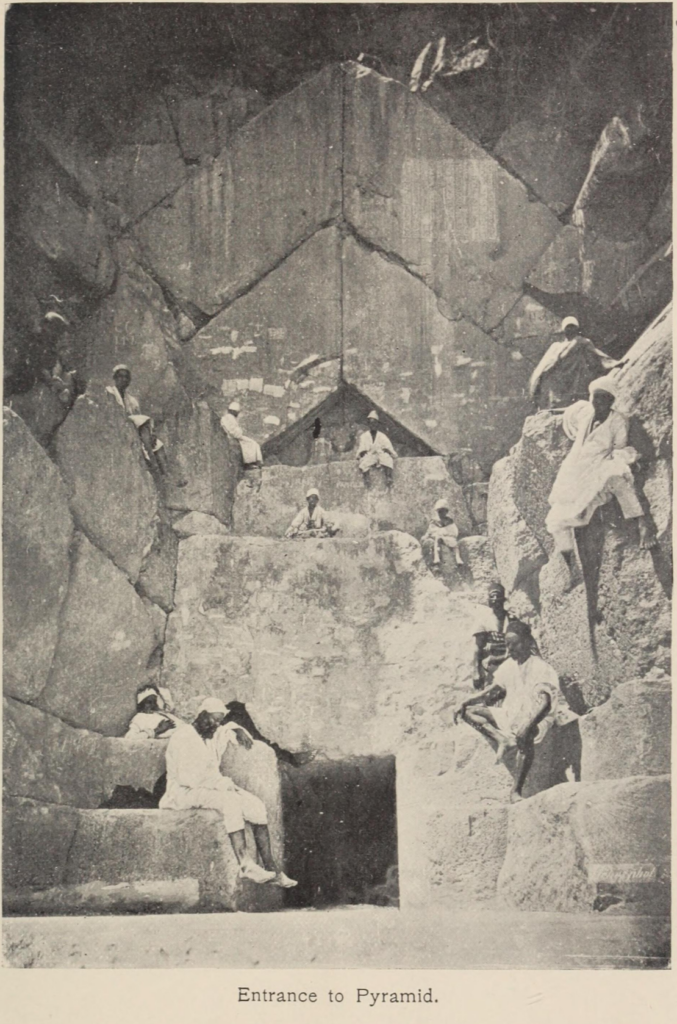
What makes this Chevron-Shaped structure architecturally unusual.
It is the only known exterior entrance in Egypt crowned by a chevron—a deliberate load‑bearing form unmatched elsewhere in ancient architecture.
Egyptian builders typically present a framed exterior opening using rectangular geometry: straight lintels, vertical square jambs, or trilithon‑style door frames.
This exposed chevron breaks that pattern. Two rows of precisely angled blocks form a gabled saddle above the location of the entrance, diverting weight while creating a visible architectural marker.
What makes this feature unusual is not only its triangular form but its placement on the exterior of a monument where visible openings are otherwise strictly rectangular. The builders positioned these carefully finished chevron directly above the original entrance, pairing a triangular relieving vault with a rectangular doorway—an arrangement not seen elsewhere in Egyptian architecture.
This raises the question of intent: the chevron clearly serves a structural purpose, but its visibility and precision suggest it may also have been meant to signal the threshold below, marking the true point of entry into the pyramid.
Brilliant Minds, The Ingenuity behind the Chevron-Shaped Structure
Imagine the ingenuity required to design a massive inverted V‑shaped entrance situated 55.77 feet (17 meters) above ground level, capable of carrying the immense weight above it without risking collapse. The masons cutting the Tura limestone had to be exact; the builders placing it had to be precise. This was not the work of improvisation or trial and error but of architects who understood load paths, stress distribution, and the behavior of stone under pressure. Their solutions were elegant, efficient, and mathematically informed, revealing a level of engineering intelligence that continues to challenge modern assumptions about what Old Kingdom builders knew and how they applied that knowledge.
Visibility of the Chevron‑Shaped Structure During Construction
Long before the final casing stones were placed onto the pyramid, the Chevron‑Shaped Structure was already known and unmistakable. Made from the same fine Tura limestone quarried east of the Nile—equally polished, equally bright—it stood out as a brilliant white architectural marker on the rising north face.
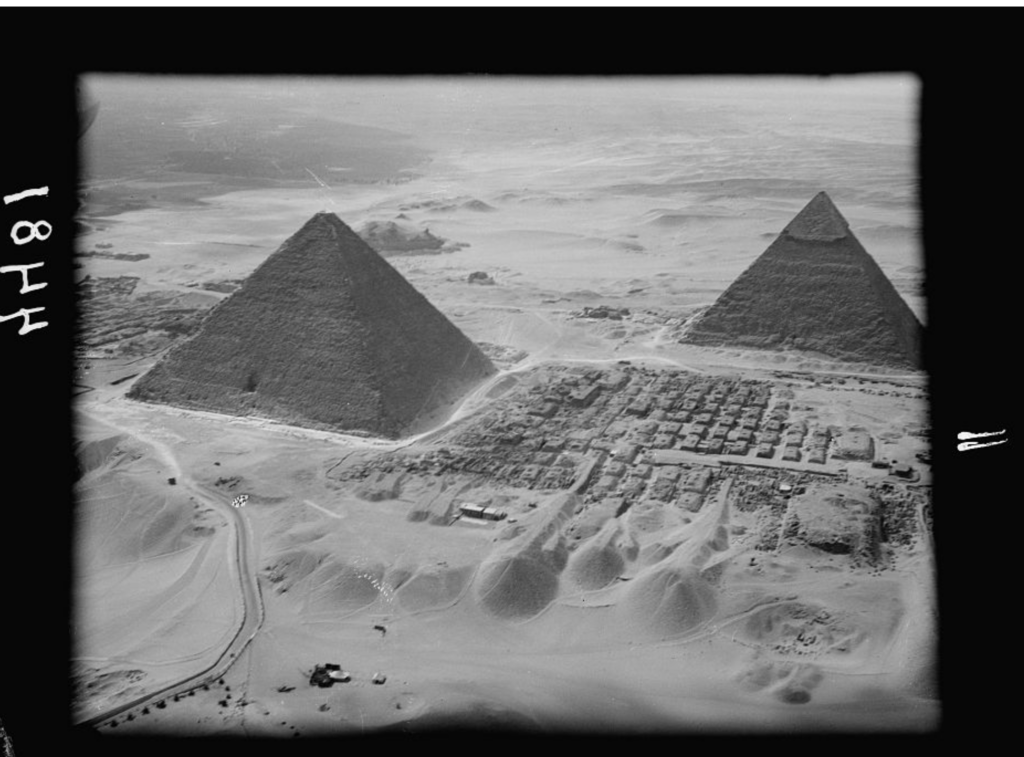
Its geometry was intentional, its visibility deliberate, and its purpose clear to the people who built the monument. Workers hauling stone, overseers directing teams, and communities living around the plateau all saw the chevrons as the protective frame of the ancient entrance. It was impossible to miss, impossible to misinterpret, and impossible to hide.
Two Entrances, Two Histories on the Great Pyramid’s North Face
To understand the changes, it helps to name the two openings on the north face:
- The upper chevron‑shaped structure — the protective stone frame.
- The original ancient entrance directly below it — preserved but no longer visually open.
- The lower tunnel on the far right — the forced medieval entry, commonly known as the robbers’ tunnel, traditionally linked to Caliph al‑Maʾmūn around 820 CE, and the one tourists use today. It is easily spotted because it resembles a hand giving a thumbs-up.
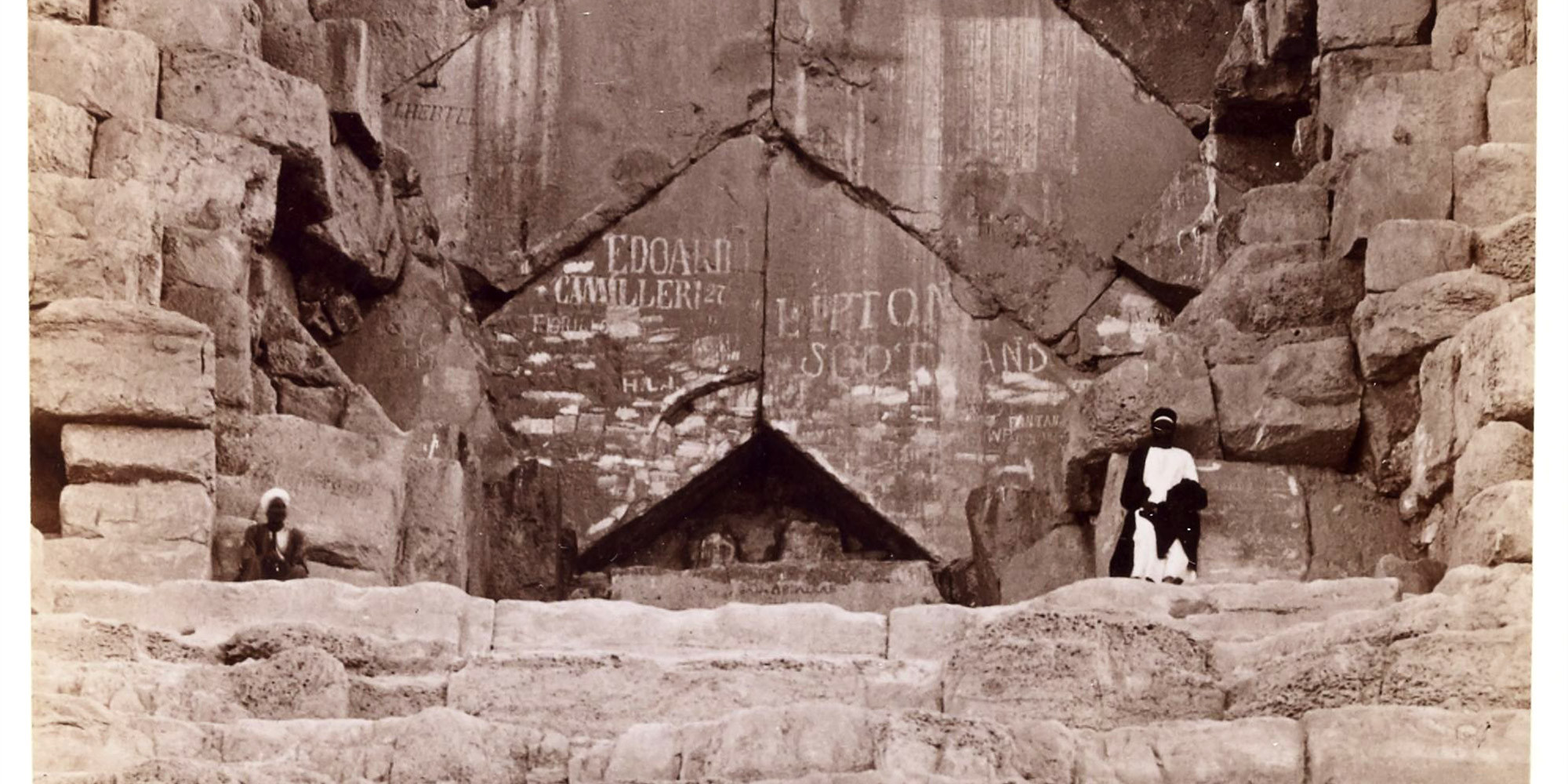
Photographs from the 1800s show both openings clearly. The stone between them was open and easy to read, and the ancient entrance was still part of the visitor’s view.
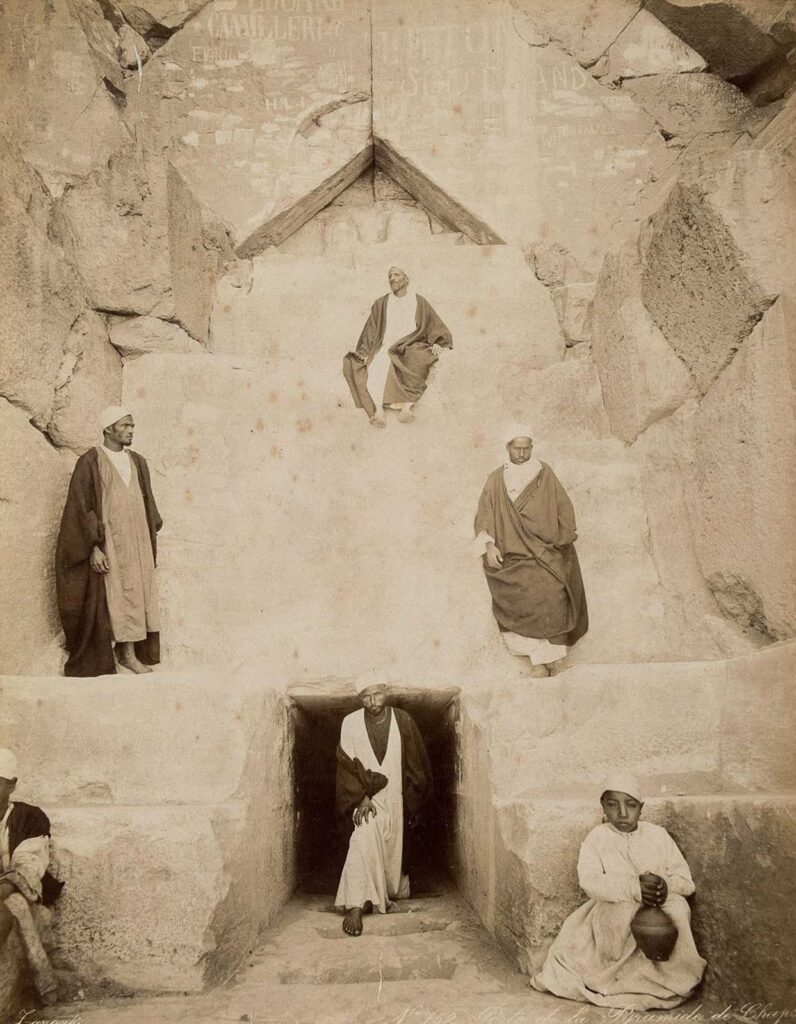
Constantine Zangaki, Photographer, No. 752 Port De La Pyramide De Cheops, c. 1860-1890.
Upper Chevron Shaped Structure & Original Entrance — the true rectangular entrance embedded in triangular geometry. Notice only the lower set of inverted V-shaped stones is visible.
Artistique Gabriel Lekegian & Co., Photographer, Entree de la Pyramide No. 14., c. 1885
Lower Medieval Tunnel — the forced entry attributed to al‑Maʾmūn on the far right side of the photo.
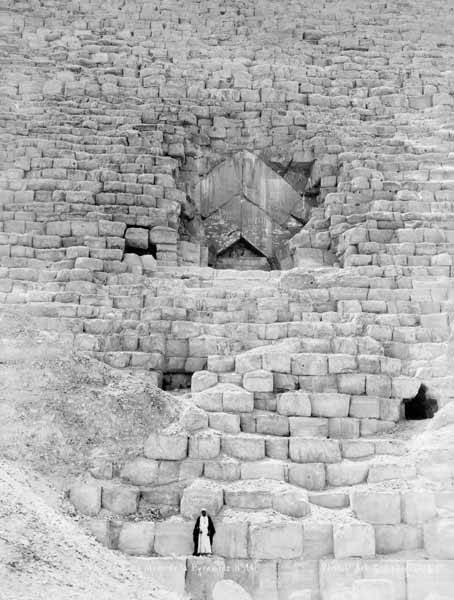
The ancient entrance was said to be rediscovered when al‑Maʾmūn’s workers cut their way in using fire, battering rams, chisels, and hammers. Early explorers climbed toward it. Denon sketched it. Photographers in the 1860s captured it plainly. Travelers in the early 1900s stood beneath it.
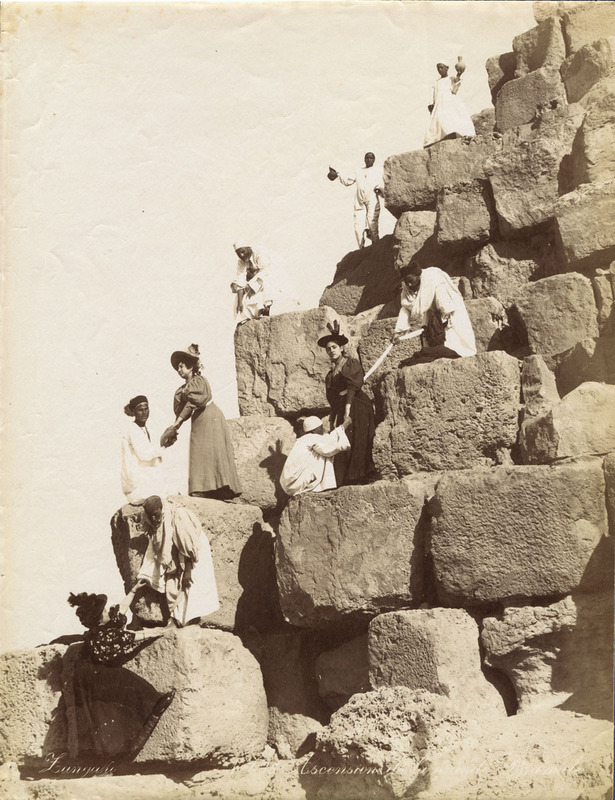
Tourists in the late 1800s and early 1900s climbed toward the ancient entrance as well, and the photographs from that era capture exactly how visible it still was.
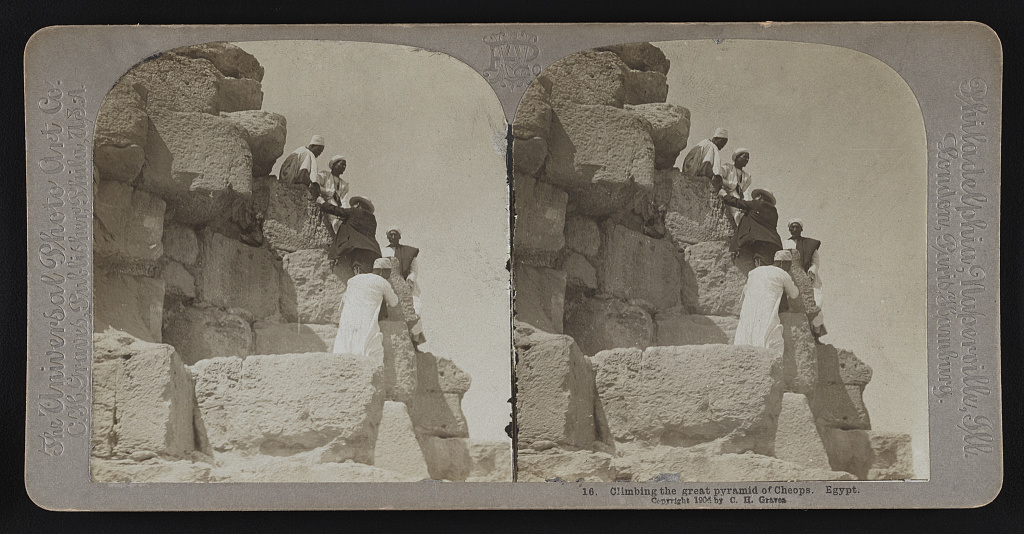
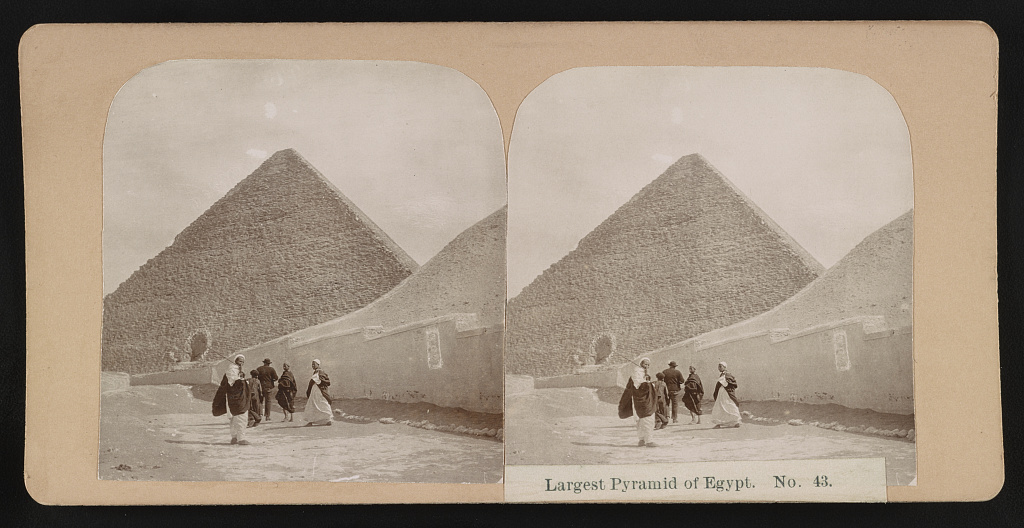
How the Chevron‑Shaped Structure Was Seen Across Generations
A century of photographs makes this visibility unmistakable.
- 1860s–1890s: wide open, unmistakable
- Early 1900s: still visible, stones shifting
- 1950s–1970s: still visible, geometry subtly different
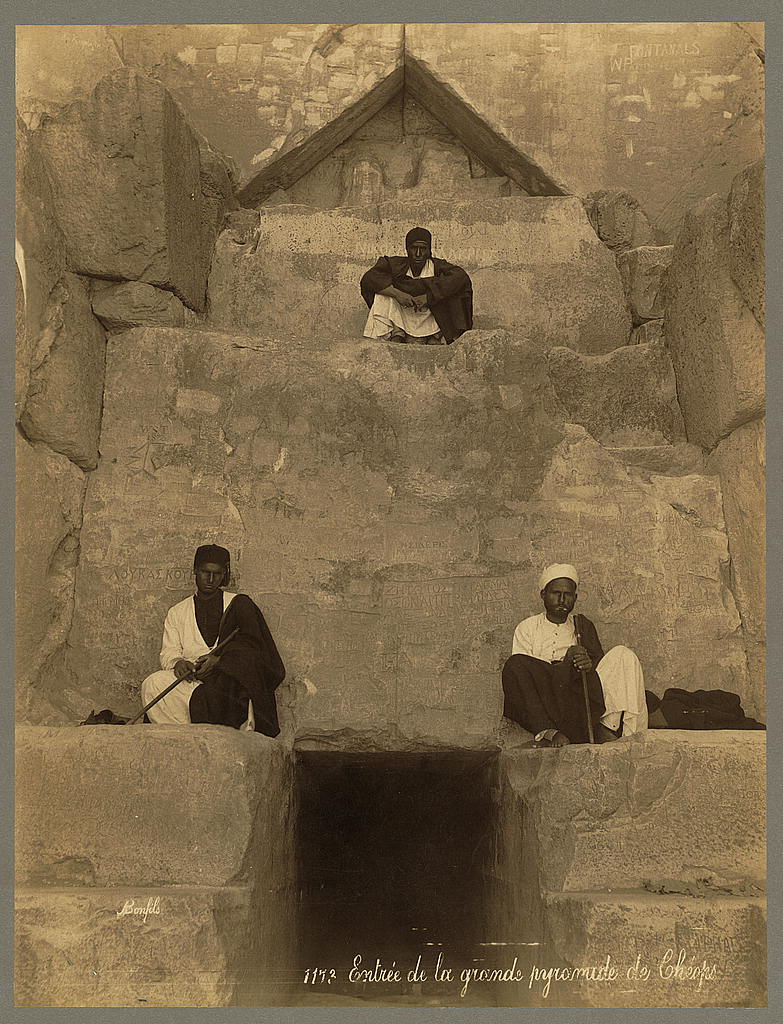
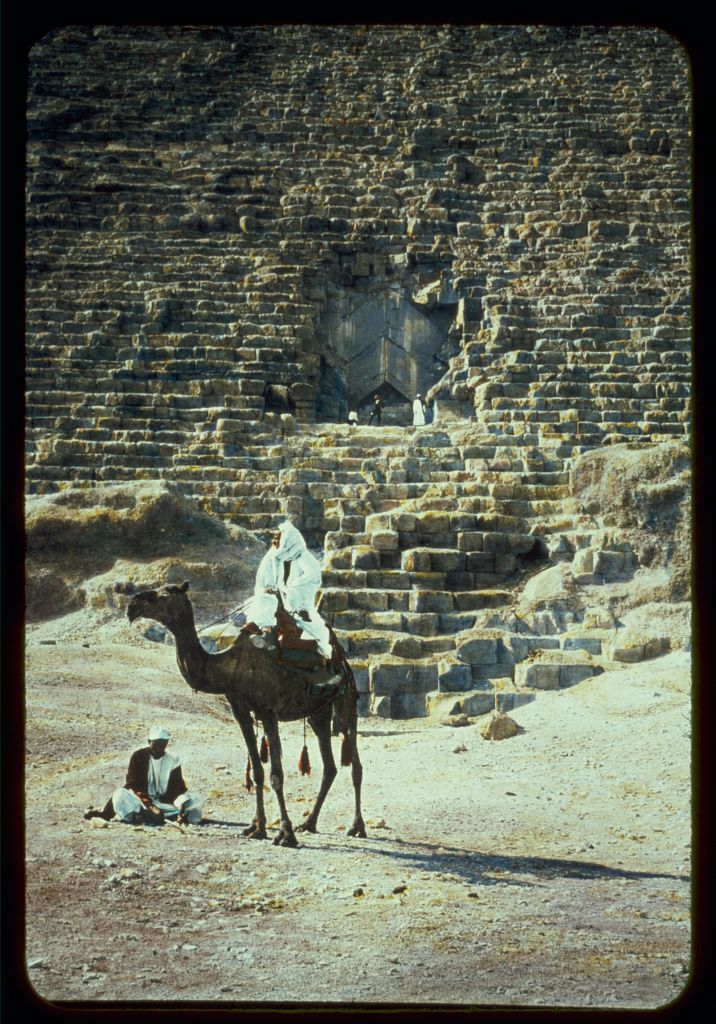
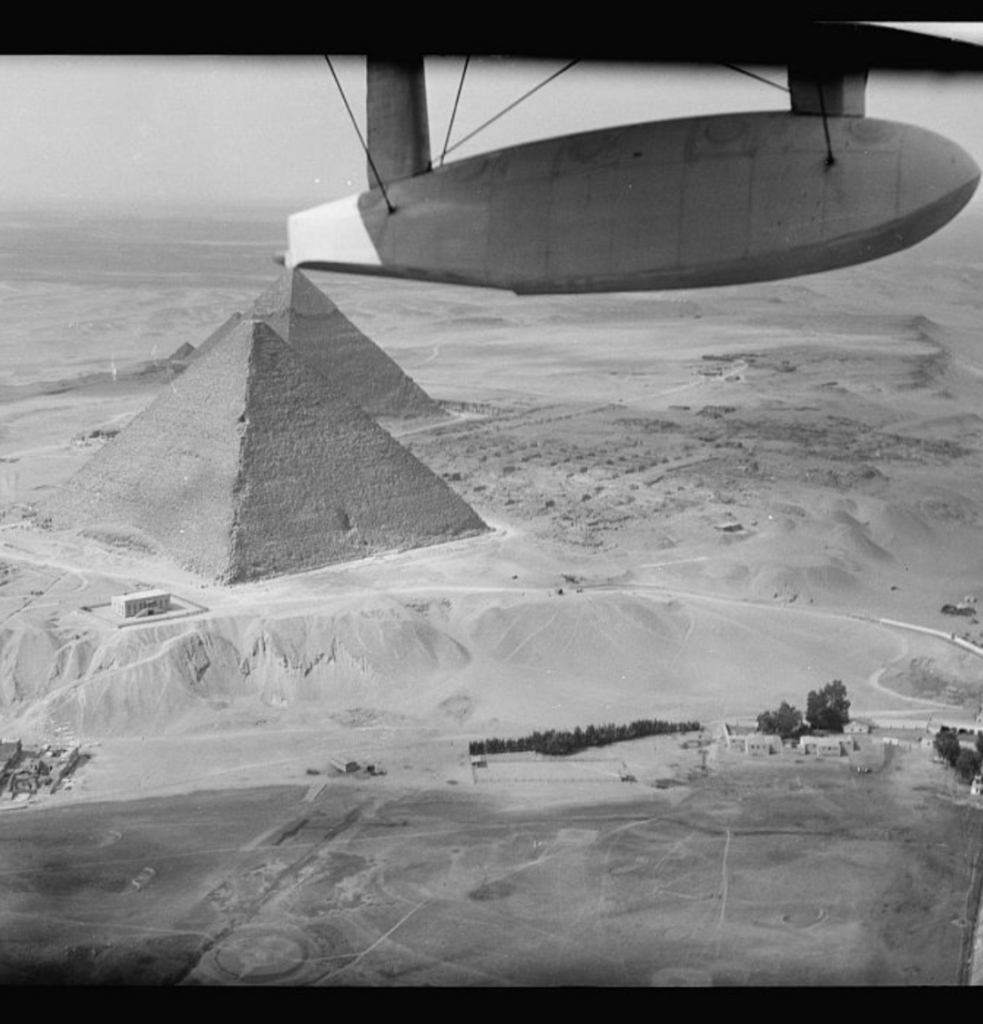
The Chevron‑Shaped Structure a Visible and Recorded Landmark
Before a modern carriage road was built in 1868, the only land route from Cairo to the Great Pyramid was a narrow, tree‑lined donkey path that followed the edge of the Nile floodplain and curved toward the plateau. This road ran alongside the north face of the pyramid, bringing every traveler—locals, workers, pilgrims, and early visitors—directly past the side where the Chevron‑Shaped Structure sits. Anyone approaching the monument from this route would have seen the chevrons clearly and continuously as they moved toward the base. They were not hidden; they were part of the everyday landscape.
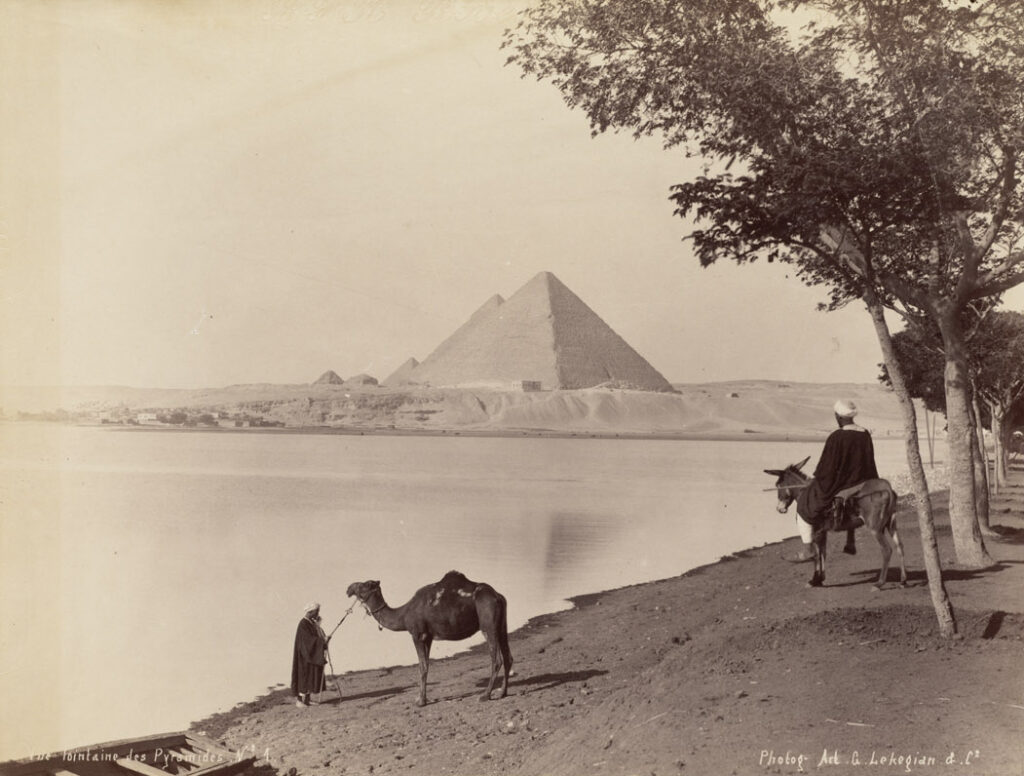
Travelers of the nineteenth century described the same approach they followed along this donkey road. As visitors moved beside the north face, the Chevron‑Shaped Structure stood directly above them, an unmistakable feature of the ascent toward the pyramid. Writers recorded what they saw, and their accounts confirm what the photographs show: the chevrons were part of the ordinary experience of reaching the Great Pyramid.
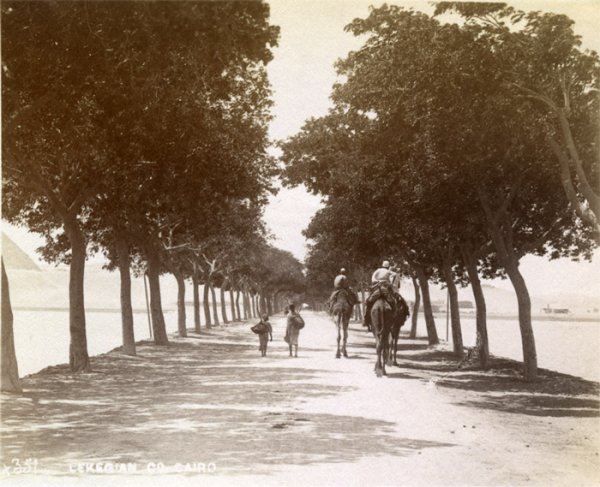
A broad road, lined with trees, elevated by an embankment above the highest inundation of the Nile, and conducted by a magnificent iron bridge across the river, extends direct from Cairo to the Pyramids, and can be traversed by carriage in an hour and a half. Until 1868 an old roundabout donkey road was the only means of reaching them, and this frequently out of repair and obstructed by water. The Prince and Princess of Wales were the first to drive without interruption from Cairo to the Pyramids. When the Suez Canal fetes were held in the following year, the road was in as perfect order as at the present time. (Buckley, 21)
This description appears in Chapter XXVII of J. M. Buckley’s Travels in Three Continents (1895), where he recounts the first modern carriage road to the pyramids.
The Chevron‑Shaped Structure in a Landscape That Never Lost Sight of It
The lived landscape around Giza never lost sight of the Great Pyramid or the Chevron‑Shaped Structure on its north face. For communities moving along the Nile’s fields and waterways, the pyramid was a constant presence—visible in every season, through every inundation, and across every generation. Local farmers worked beneath it, children played near its stones, and travelers followed familiar paths that carried them alongside the north face where the chevrons stood plainly in view.
This was not a hidden feature or an esoteric detail; it was part of the horizon, part of the route, part of ordinary life. Nineteenth‑century visitors recorded the same experience, preserving in writing what Egyptians had always known: the chevrons were a recognizable landmark long before modern archaeology labeled them a rediscovery.
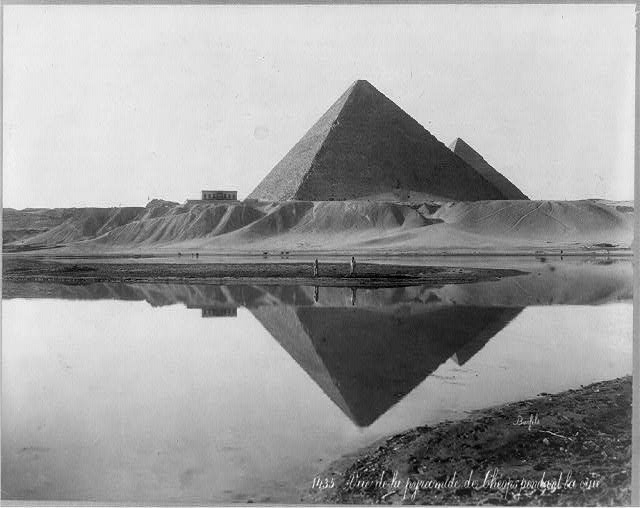
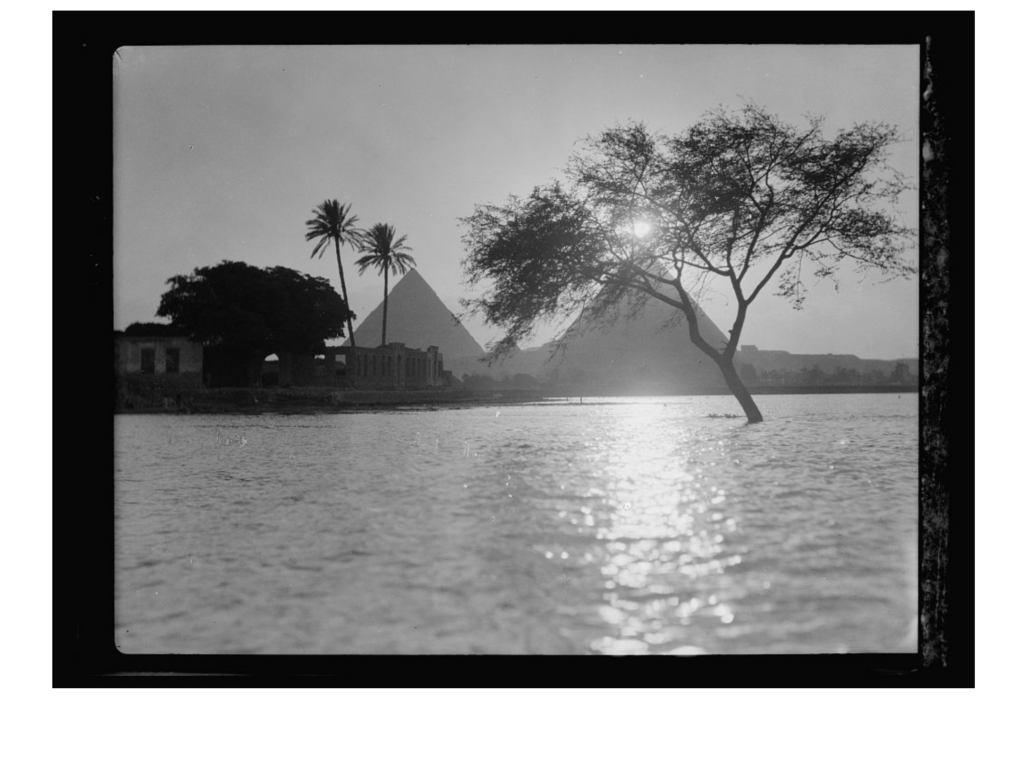
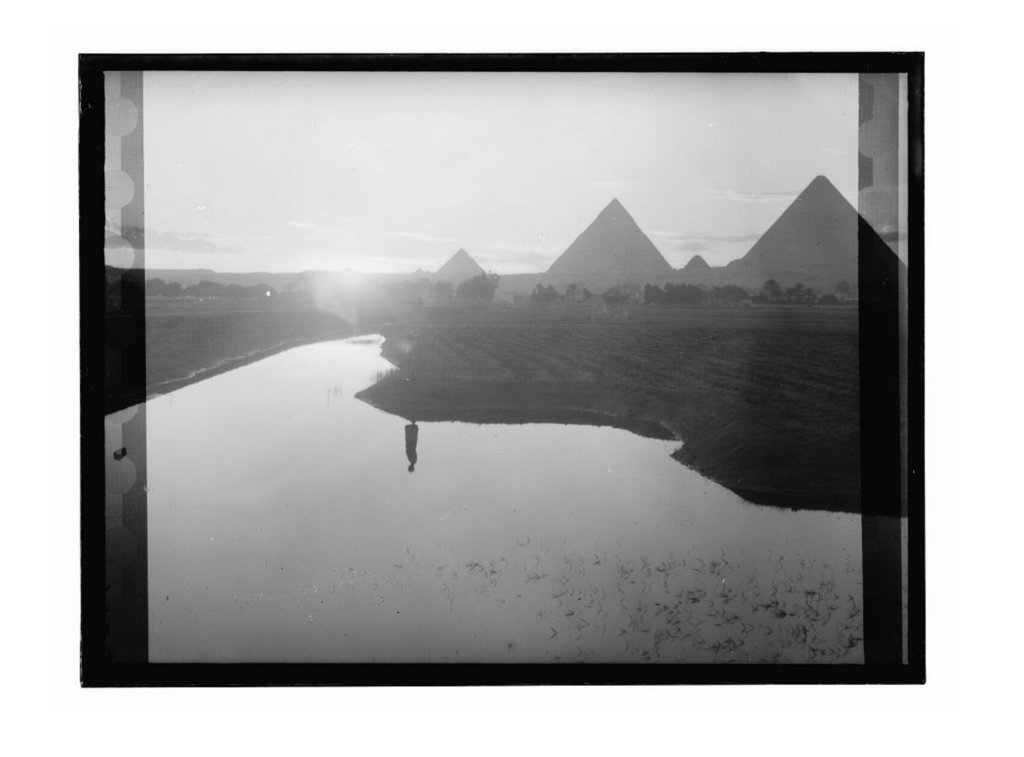
The Chevron‑Shaped Structure and the Slow Disappearance of an Ancient Entrance.
In recent decades, the area beneath the Chevron‑Shaped Structure has shifted in subtle but important ways. Earlier photographs show the original entrance more open, with fewer stones crowding the space beneath the chevrons. By the early 2000s, the ladder and access point leading toward the ancient entrance were still visible.
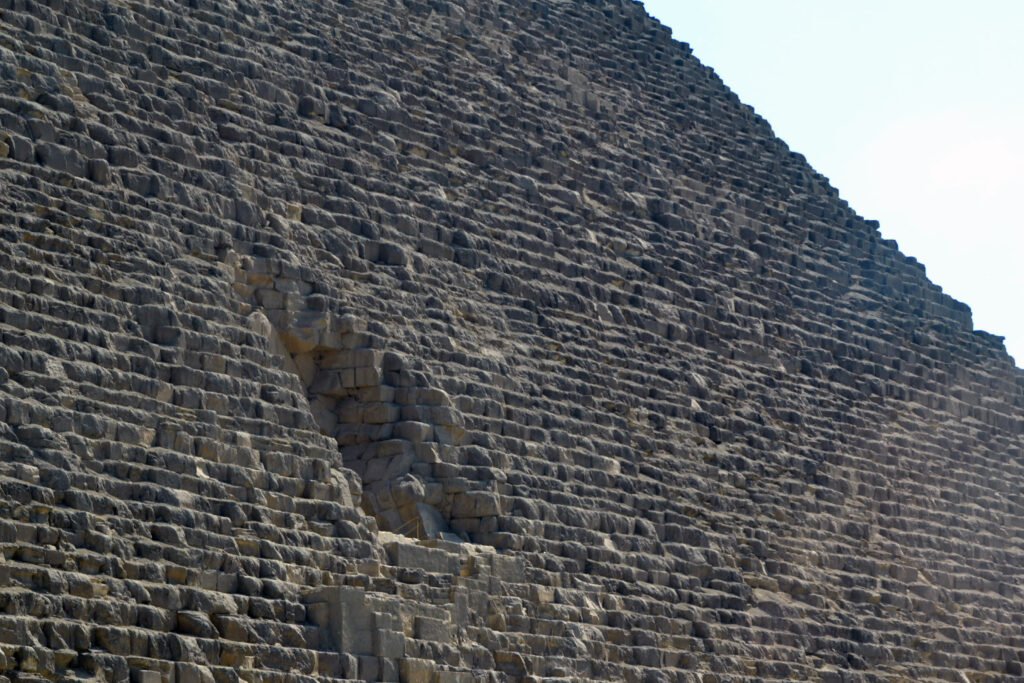
As conservation work continued and preparations for muon imaging began, stones were moved, repositioned, and in some cases added. These changes gradually altered the appearance of the north face.
By 2022 and again in 2024, the chevron‑shaped structure remained preserved, but the original entrance had become less visually obvious from ground level. The access point was increasingly concealed by the shifting stone landscape.
Then, in 2023—during the ScanPyramids investigation—the area briefly opened again as scaffolding, platforms, and equipment were installed beneath the chevrons to examine the newly confirmed North Face Corridor.
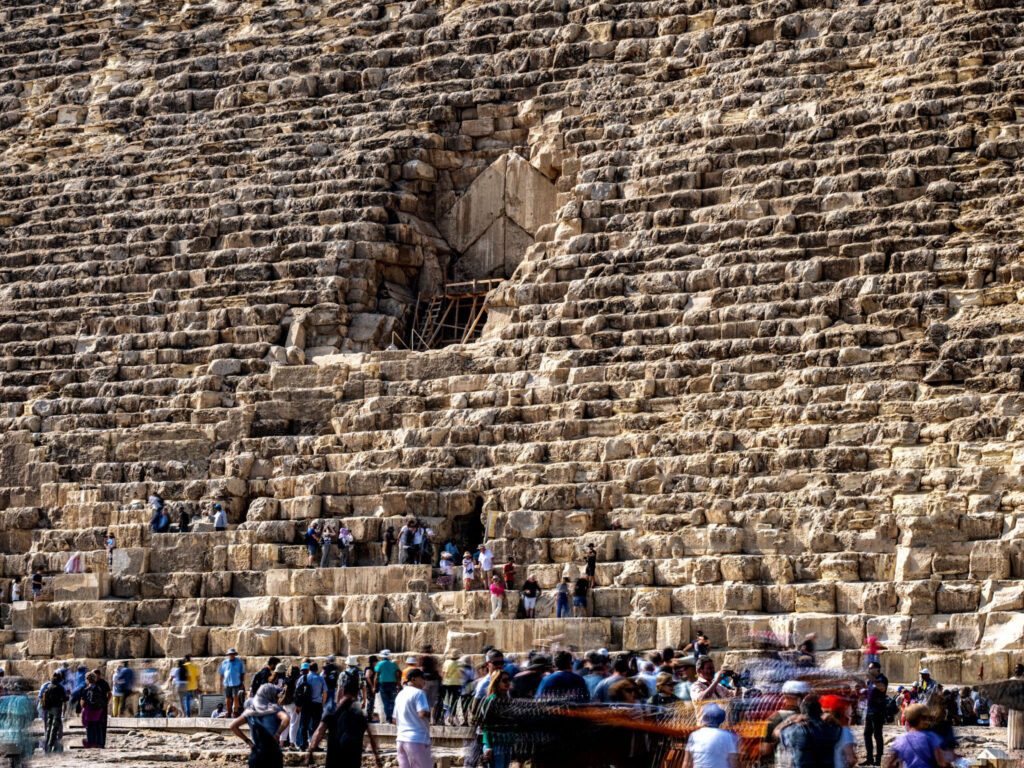
José A Bernat Bacete Getty Images 2023
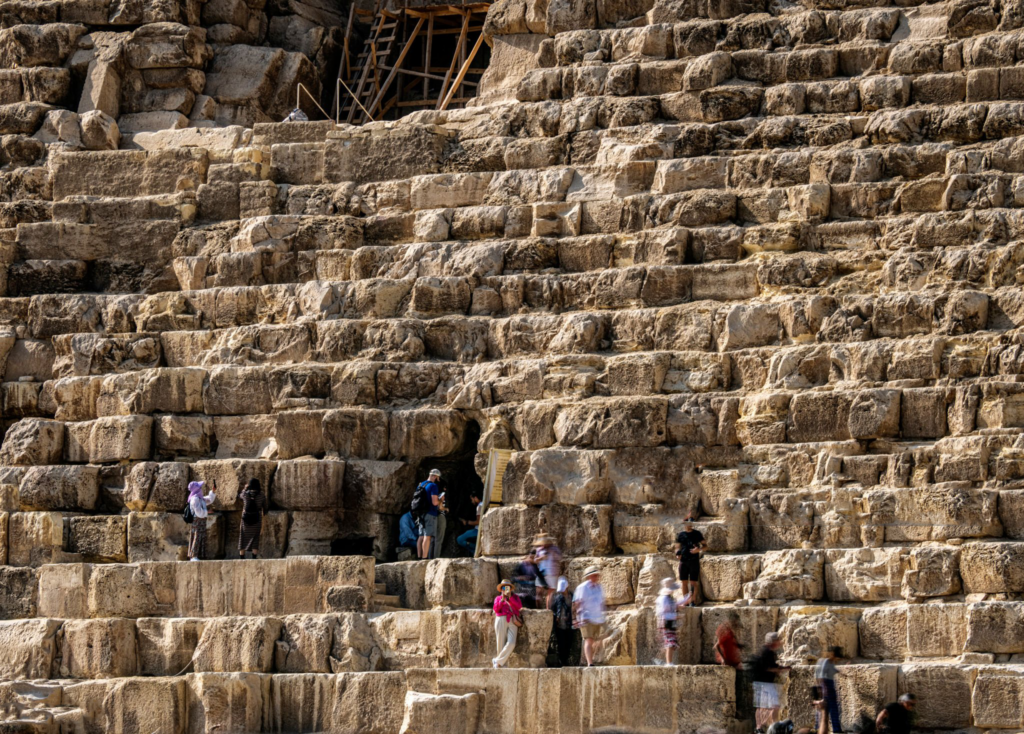
José A Bernat Bacete Getty Images 2023
The Muon Era: A New Chapter in the Chevron’s Story
Muon imaging returned attention to the north face and the Chevron‑Shaped Structure, revealing new information about what lay behind it.
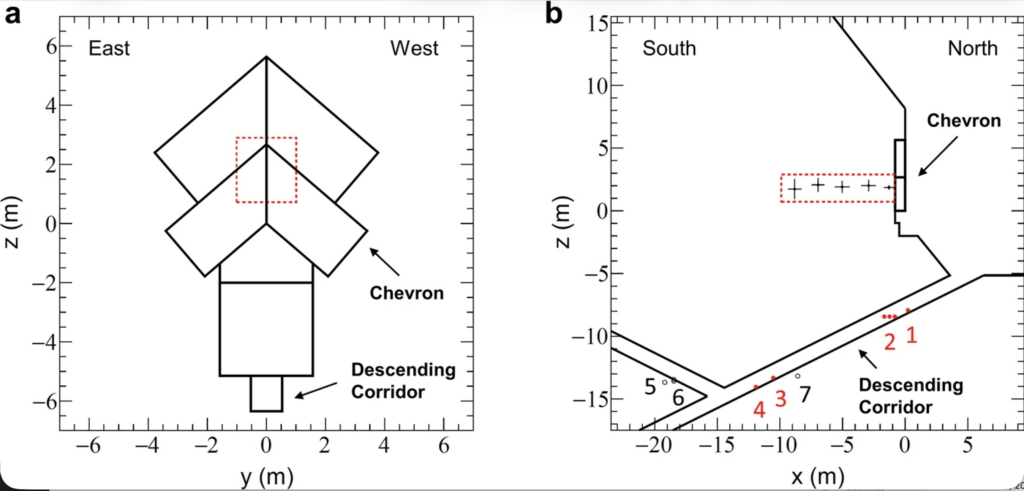
Behind the Chevron‑Shaped Structure — When X Marks the Spot
The 2023 photos capture a pivotal moment: scaffolding, wooden platforms, and equipment set beneath the chevron during the investigation of the North Face Corridor—a void first detected by muon radiography in 2016 and confirmed in March 2023 by the ScanPyramids project.
This hidden corridor, about 30 feet (9 meters) long and roughly 6 feet tall, sits directly behind the chevron‑shaped structure, revealing that the ancient builders created a concealed structural chamber there—one never documented before.
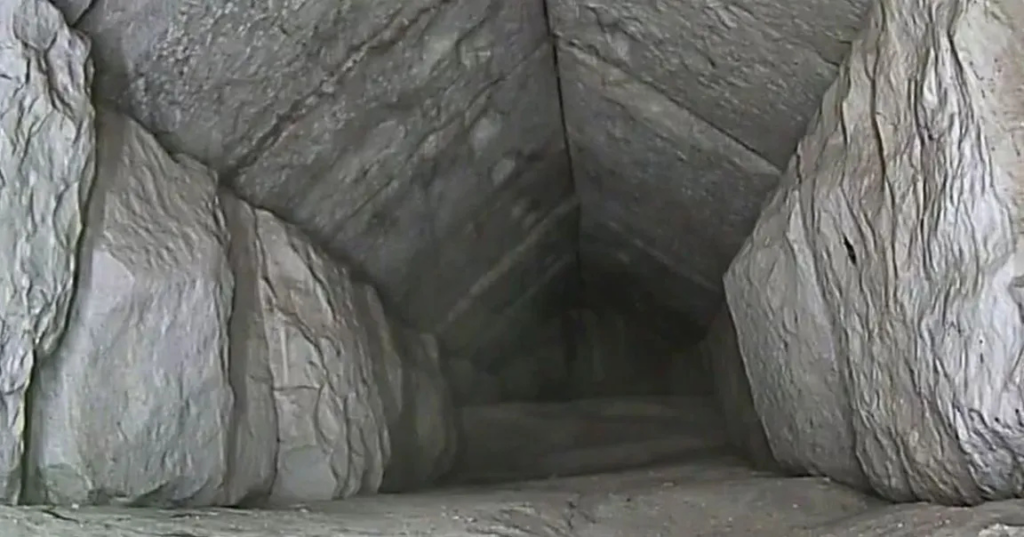
As Mostafa Waziri, head of Egypt’s Supreme Council of Antiquities, explained in an interview with Reuters, the newly discovered corridor “likely helped distribute weight within the massive structure,” a practical necessity in a monument built from “2.3 million stone blocks, each weighing an average of more than two tons.”
A Starseed Egypt Adventure Access: 2022 vs. 2024
There was a clear before and after to the Muon work, changes we saw firsthand during our Starseed Egypt Adventures between 2022 and 2024. Most noticeably, access became more restricted.
Even with scheduled private access in both 2022 and 2024, I was discouraged from stopping beneath the upper chevron entrance. In 2022, the steps leading up to it were still physically reachable, but I was asked not to climb or pause there. By 2024, the message was firmer: keep moving toward the lower medieval tunnel—the tourist way.
This photograph, taken from the rooftop of the four‑story Marriott Mena House Hotel during the Starseed Egypt Adventure 2022 with Althea Provost, shows starseeds looking south toward the Great Pyramid of Khufu and the Pyramid of Khafre. From this elevated vantage point, the Chevron‑Shaped Structure on the north face is clearly visible, showing that it can be seen from modern viewpoints outside the Giza Plateau.

Beneath the Chevron-Shaped Structures in 2022 and 2024
My 2022 photo shows the chevron unobstructed in front of me, and at the edge of the frame you can spot the tail of one of the dogs who trotted up to greet me. That tail belongs to a dog who looks remarkable like Boka—now recognizable from the famous 2024 photo taken from the summit of the Pyramid of Khafre. My image isn’t the viral one; it simply caught him two years earlier, a quiet moment that later gained meaning once his climb made him known around the world.
But for me, the heart thread is this: In 2024, as we emerged from the interior of the Great Pyramid, the same dog — or one who looks just like him —appeared again with his companion. A small continuity between two very different years of access, woven by the presence of the same friendly street dogs who had greeted us before.
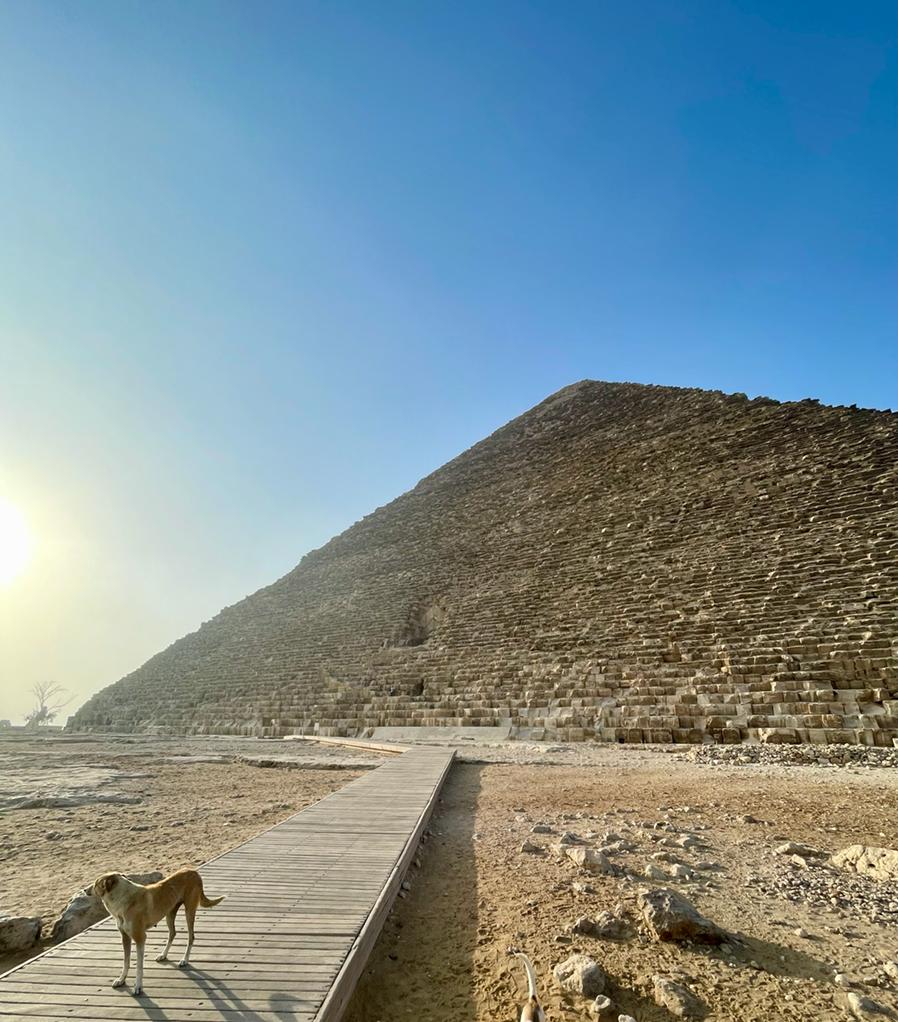
To capture the 2024 photo, I had to be intentional. I gathered part of our group, paused just long enough to request a group photo, and used that moment to point upward—deliberately—toward the chevron. Without that request, we would have been ushered along with everyone else, never given the chance to look up and see what early explorers once saw so clearly.
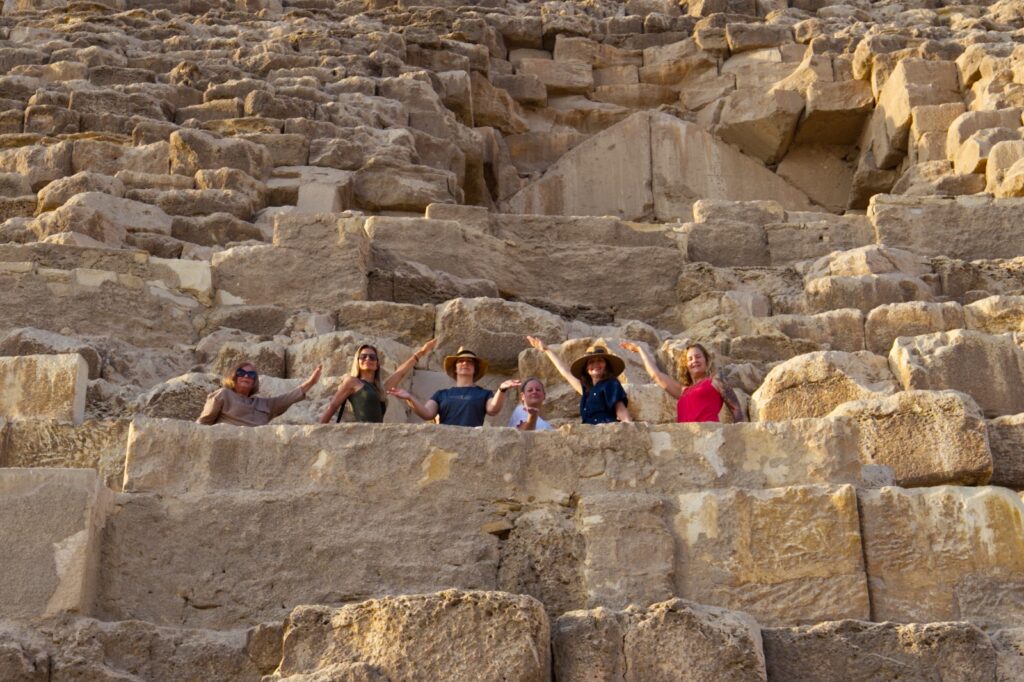
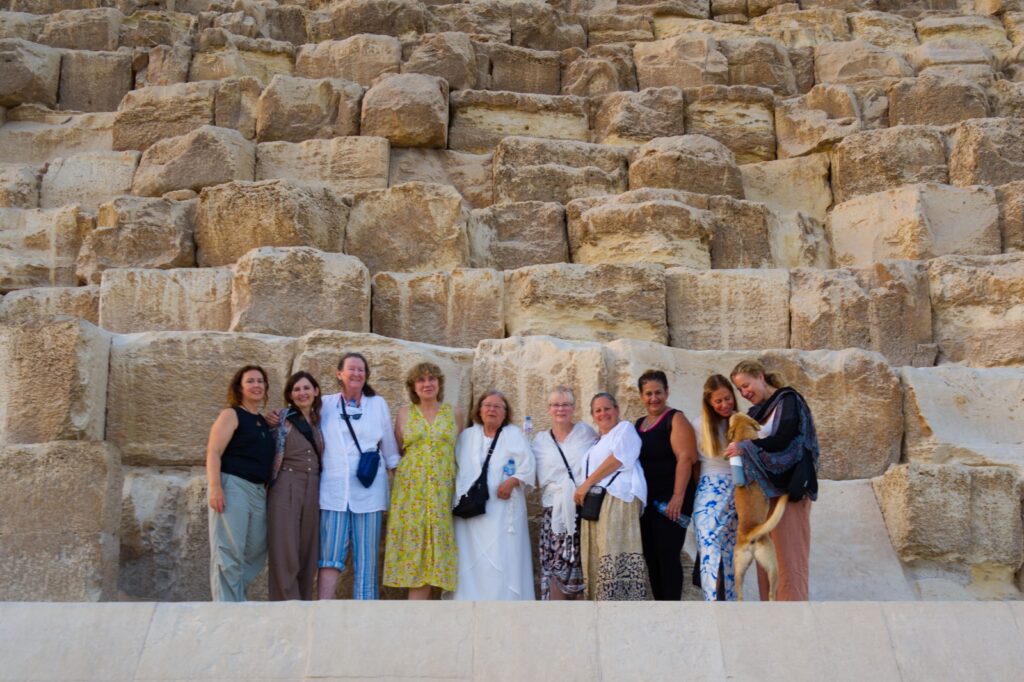
Chevron‑Shaped Structures Are Timeless — and in 2024, Boka (or His Look‑Alike) Re‑Captured Our Hearts
Explore the photos from our Starseed Egypt Adventure 2024—and revisit the heart thread that began in 2022.

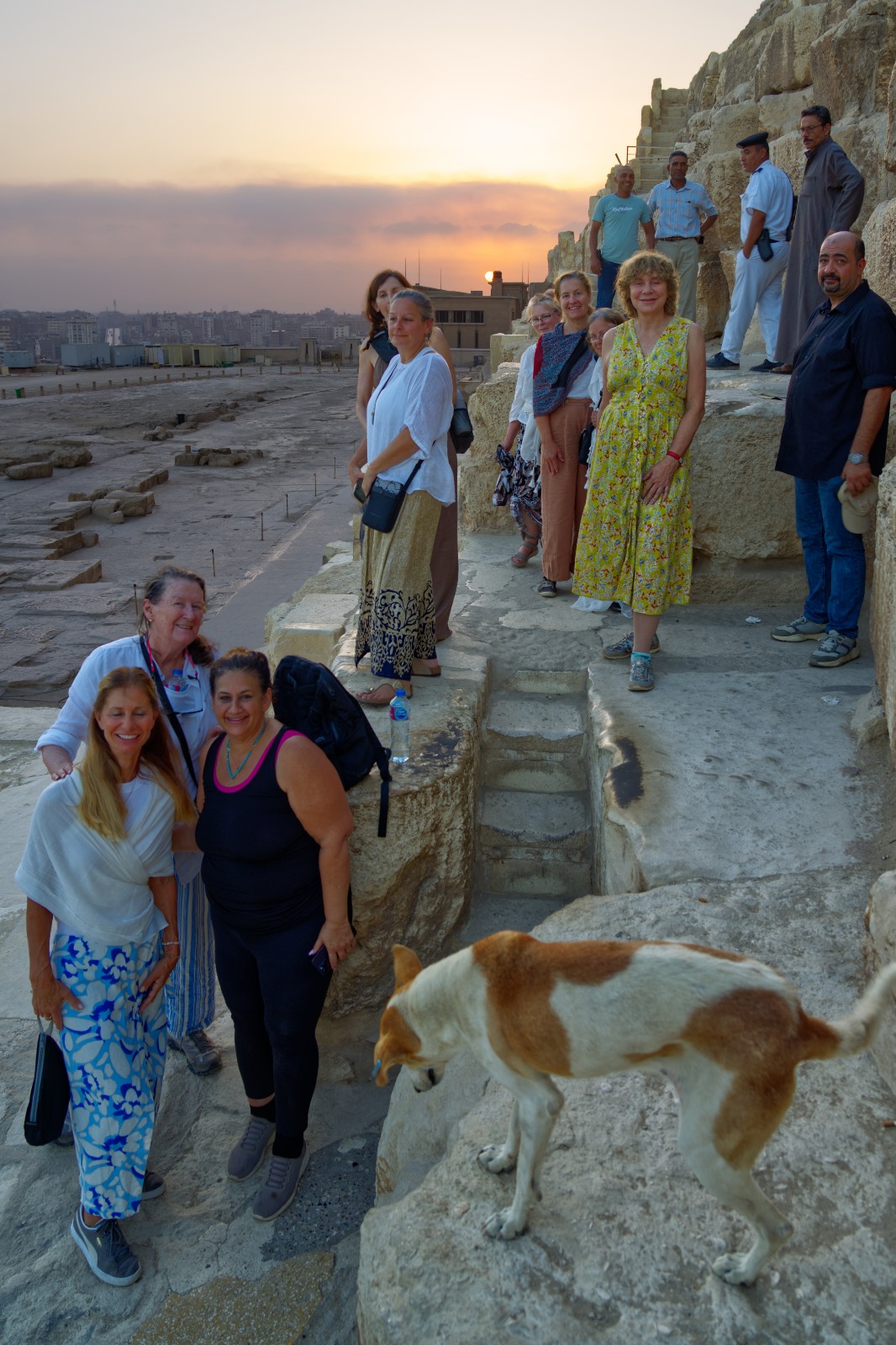
Our 2024 photo captures the Great Pyramid at a moment of transition. The ancient chevron‑shaped structure is still there, but now visually blocked—only one set of angled stones remains visible. The medieval “robbers’ tunnel” dominates the modern approach. The stone arrangement has shifted. The plateau continues to change under the weight of ongoing development. Did you notice the difference?
Our Starseed Egypt Adventure 2024 group becomes part of that record—standing at a threshold that has been seen differently by every generation before and after us.
The Great Pyramid endures, but the way we encounter it does not. The stones shift. The sands move. Our access shifts. And our understanding shifts with it.
This project—these images, this timeline, this story—is a way of honoring that movement. Of documenting what has changed, what remains, and what we might otherwise forget to notice.
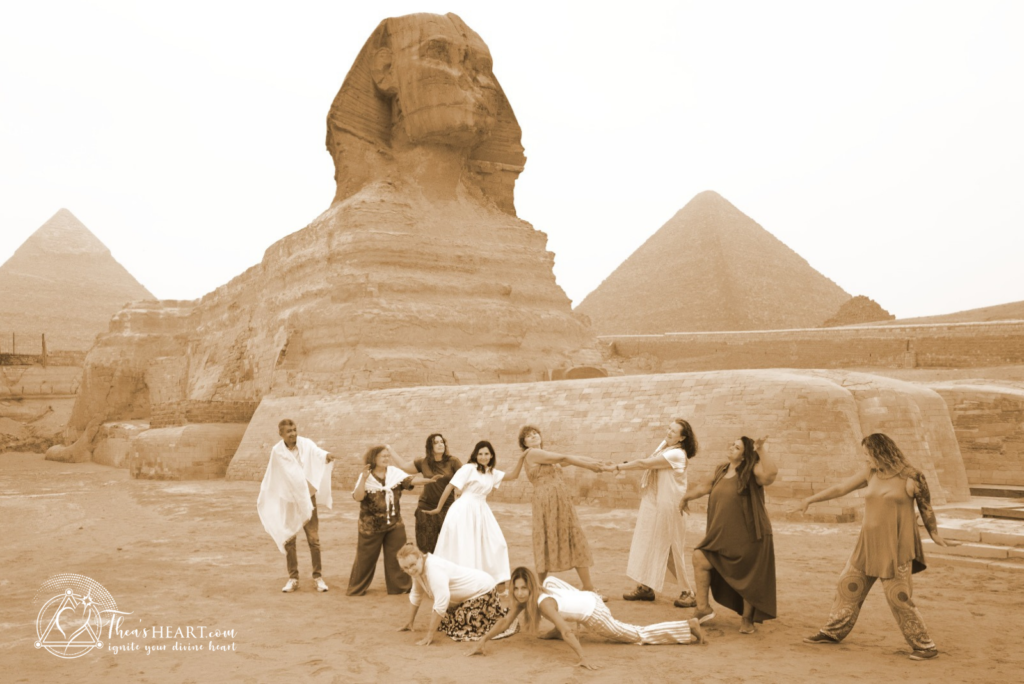
STARSEED EGYPT ADVENTURE 2024
SPHINX
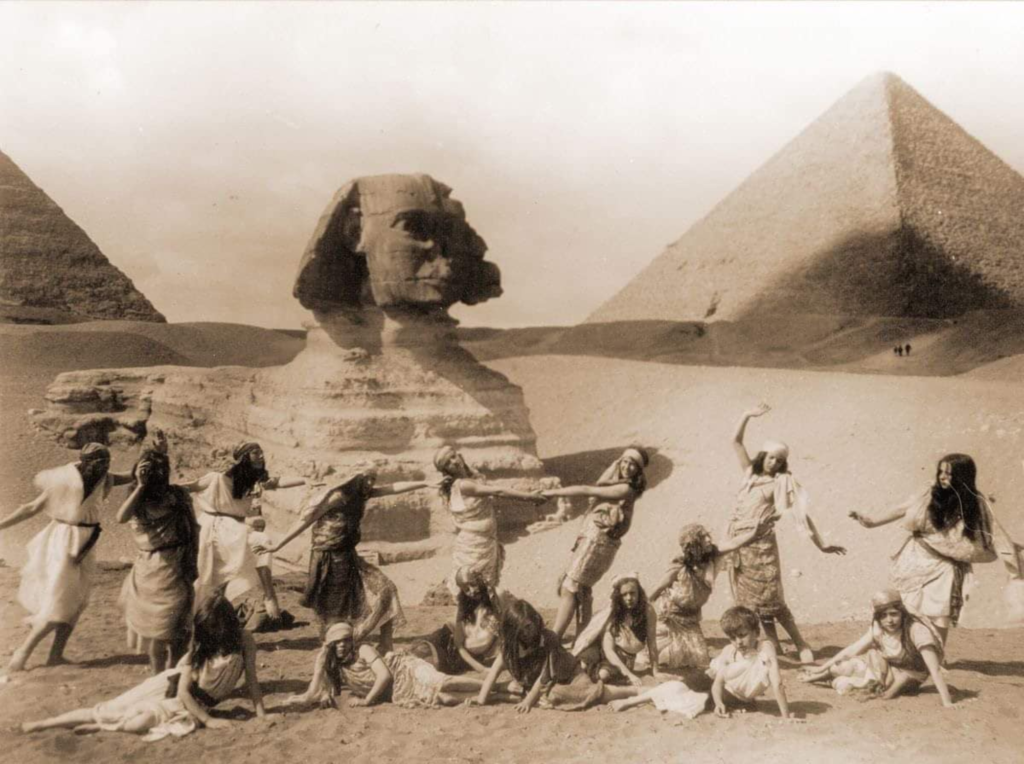
1920’S GATHERING
SPHINX
More about Althea Provost
And the story doesn’t end in Egypt. Our next Starseed Adventure takes us to Türkiye, where another layer of ancient architecture, shifting landscapes, and human continuity waits to be read. If this timeline of the Great Pyramid’s chevron-shaped structure sparked something in you—curiosity, recognition, or the desire to stand in these places yourself—then Türkiye is our next chapter.
Sources Cited in Chevron-Shaped Structure Above the Entrance Into the Great Pyramid
American Colony . Photo Department, photographer. Air views of Palestine. Cairo and the pyramids. The two largest pyramids of Gizeh. Taken from the west. [c. 1932] Photograph. Retrieved from the Library of Congress, <www.loc.gov/item/2019706692/>.
American Colony . Photo Department, photographer. Air views of Palestine. Cairo and the pyramids. Great Pyramid of Kheops i.e., Cheops showing entrance on north side. [c. 1932] Photograph. Retrieved from the Library of Congress, <www.loc.gov/item/2019706691/>.
Buckley, J. M. “Chapter XXVII: The Pyramids and the Sphinx.” Travels in Three Continents: Europe, Africa, Asia, Harper & Brothers, 1895, p. 221.
Climbing the great pyramid of Cheops. Egypt. Photograph. Retrieved from the Library of Congress, <www.loc.gov/item/2019636569/>.
Jana, Dipayan. THE GREAT PYRAMID DEBATE Evidence from Detailed Petrographic Examinations of Casing Stones from the Great Pyramid of Khufu, a Natural Limestone from Tura, and a Man-Made (Geopolymeric) Limestone.
Lewis, Aidan. “Hidden Chamber Revealed Inside Great Pyramid of Giza.” Reuters, quoted in Archaeology Worlds, 2023.
Maison Bonfils, photographer. Le Sphynx apres les déblaiements et les deux grandes pyramides / Bonfils. [Between 1867 and 1899] Photograph. Retrieved from the Library of Congress, <www.loc.gov/item/2004666756/>.
Maison Bonfils, photographer. Entrée de la grande pyramide de Chéops / Bonfils. [Between 1867 and 1899] Photograph. Retrieved from the Library of Congress, <www.loc.gov/item/2004666759/>.
Matson Photo Service, photographer. Egypt. Pyramids. Entrance to the Great Pyramid of Cheops. Between 1950 and 1977. Photograph. Retrieved from the Library of Congress, <www.loc.gov/item/2019705717/>.
Matson Photo Service, photographer. Egypt. Cairo. Evening scene of the Nile overflow near pyramids. Photograph. Retrieved from the Library of Congress, <www.loc.gov/item/2019702001/>.
Matson Photo Service, photographer. Egypt. Cairo. Evening scene of the Nile overflow near pyramids. Photograph. Retrieved from the Library of Congress, <www.loc.gov/item/2019702001/>.
Matson Photo Service, photographer. Egypt. Pyramids. Great Pyramid of Cheops vividly reflected in Nile overflow. Between 1950 and 1977. Photograph. Retrieved from the Library of Congress, <www.loc.gov/item/2019705722/>.
Matson Photo Service, photographer. Egypt. Pyramids. The Sphinx and pyramid, from low viewpoint looking up. Between 1950 and 1977. Photograph. Retrieved from the Library of Congress, <www.loc.gov/item/2019705726/>.
Matson Photo Service, photographer. Egypt. Pyramids. Pyramids and palm grove reflections. Between 1950 and 1977. Photograph. Retrieved from the Library of Congress, <www.loc.gov/item/2019705723/>.
Maison Bonfils, photographer. Le Sphynx apres les déblaiements et les deux grandes pyramides / Bonfils. [Between 1867 and 1899] Photograph. Retrieved from the Library of Congress, <www.loc.gov/item/2004666756/>.
Procureur, S., Morishima, K., Kuno, M. et al. Precise characterization of a corridor-shaped structure in Khufu’s Pyramid by observation of cosmic-ray muons. Nat Commun 14, 1144 (2023). https://doi.org/10.1038/s41467-023-36351-0
ScanPyramids Project, corridor behind the chevron‑shaped structure, Great Pyramid of Khufu (2023). Image widely reproduced in international press; original documentation published in Nature Communications (2023).
©2026 Thea’s Heart, LLC® – All Rights Reserved