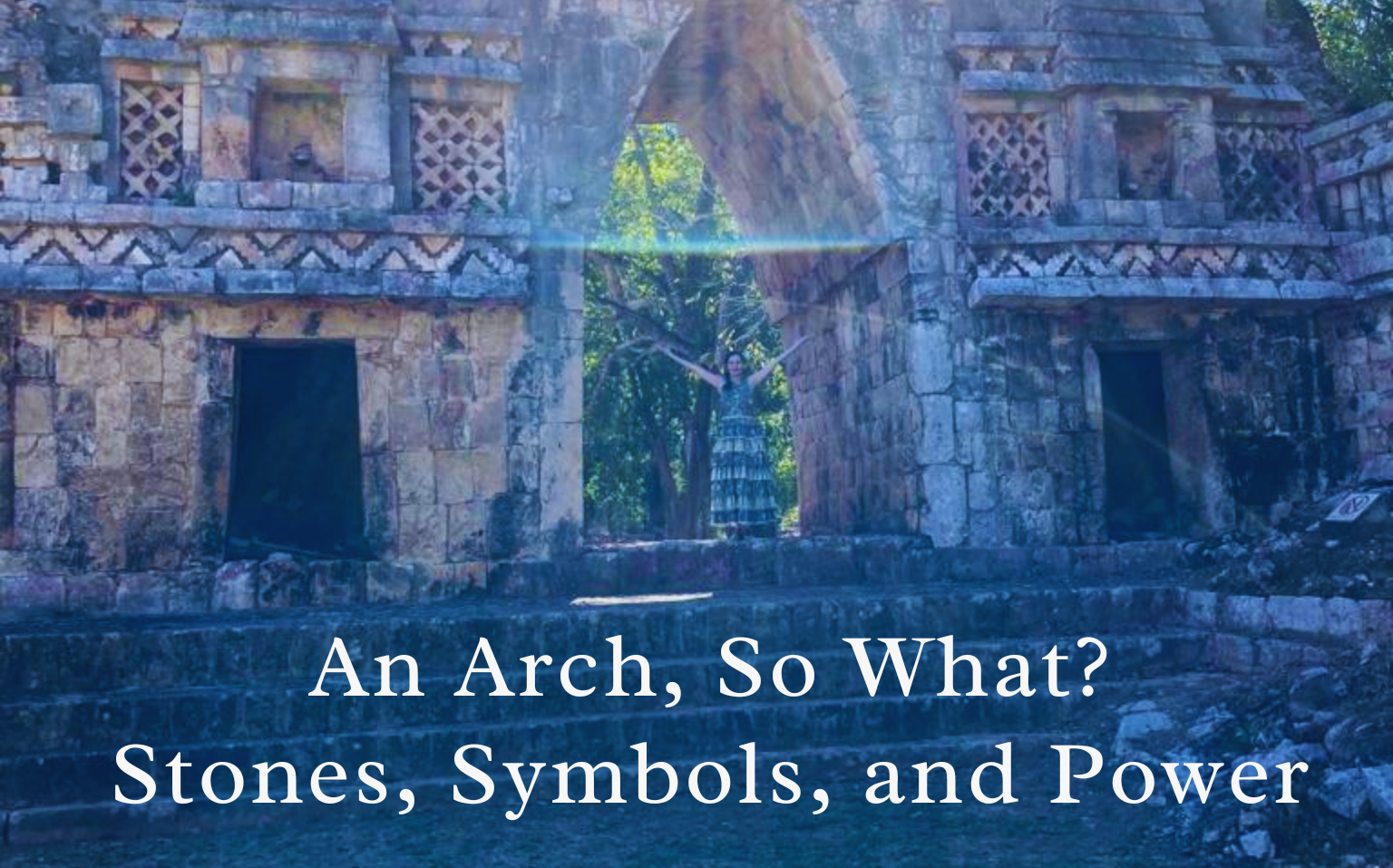
An Arch, So What? Stones, Symbols, and Power
What is it about triumphal arch symbolism that continues to command our attention? From ancient pathways to modern monuments, arches, stones, and carved symbols carry a power that transcends time. As I explore these structures — from the Arc de Triomphe to the Independence Arch — I’m drawn to how they shape memory, meaning, and collective identity. These stone gateways are more than architecture; they are thresholds of intention, authority, and spiritual resonance.
The Symbolic Power of Triumphal Arches
Well, I didn’t think I would see a triumphal arch built in my lifetime — but here we are. Had I not delivered a course on sacred arches and pathways, The White Road, the symbolism might have passed me by.
Triumphal arches are never neutral. Historically, they are designed to proclaim victory, inscribe dominance into stone, and remind societies of who rules and who defines triumph.
Stones, Symbols, and the Architecture of Meaning

An illustration of the “Arc de Trump” by Harrison Design (right). At left is the Arc de Triomphe in Paris. Wikipedia | Harrison Design
Indepence Arch
To commemorate the 250th anniversary of the United States, the “Independence Arch,” designed by Nicolas Leo Charbonneau, will be placed across the Potomac River. Modeled after the Arc de Triomphe in Paris — according to the U.S. President — it will feature a statue of “Lady Liberty” on top.
Charbonneau, however, describes it differently: Lady Victory, not Lady Liberty, poised between two eagles. Because of Trump’s reference to the Arc de Triomphe, many have already dubbed it the “Arc de Trump.”
You might remark, an arch, so what.
But an iconic monument is never just stone; its meaning shifts with power, memory, and perspective. What inspires pride for some can embody domination for others, reminding us that symbols are always contested.
Napoleon’s Arc de Triomphe
The Arc de Triomphe in Paris was commissioned by Napoleon I in 1806 to celebrate military victories and the strength of empire. Napoleon can be seen as both a revolutionary reformer and an authoritarian ruler — admired for modernization, yet criticized for wars that caused massive loss of life across Europe.
France’s iconic monument stands at the center of Place Charles de Gaulle, where twelve avenues radiate outward like a star. Designed by architect Jean-François Chalgrin, the first stones were laid on Napoleon’s birthday, August 15, 1806.
The monument’s meaning evolved with time. In 1920, the Tomb of the Unknown Soldier was placed beneath the arch. The translated inscription reads: “Here rests a French soldier who died for the Fatherland 1914–1918.”
In 1923, an eternal flame was lit to mark the Arc’s transformation from a triumphal monument to a national shrine of mourning and remembrance. Today, it embodies both victory and mourning, hosting national ceremonies that honor sacrifice as much as pride.
Sacred Pathways and the Thresholds of Power
Napoleon’s Arc de Triomphe celebrated military campaigns. Trump’s Independence Arch proposal echoes that same tradition of earthly triumph. Yet the Maya, Inca, and Egyptians built with the cosmos in mind. In The White Road, I explored how ancient pathways were not built to glorify rulers but to align human life with greater rhythms. For the reader, here are commonly understood sacred pathways.
Ancient Pathways of Connection
- The Egyptians created processional ways that mirrored celestial events.
- The Greeks walked the Sacred Way from Athens to Eleusis as a ritual of initiation, not conquest.
- The Maya, Inca, and Minoans built roads and temples aligned with the cosmos.
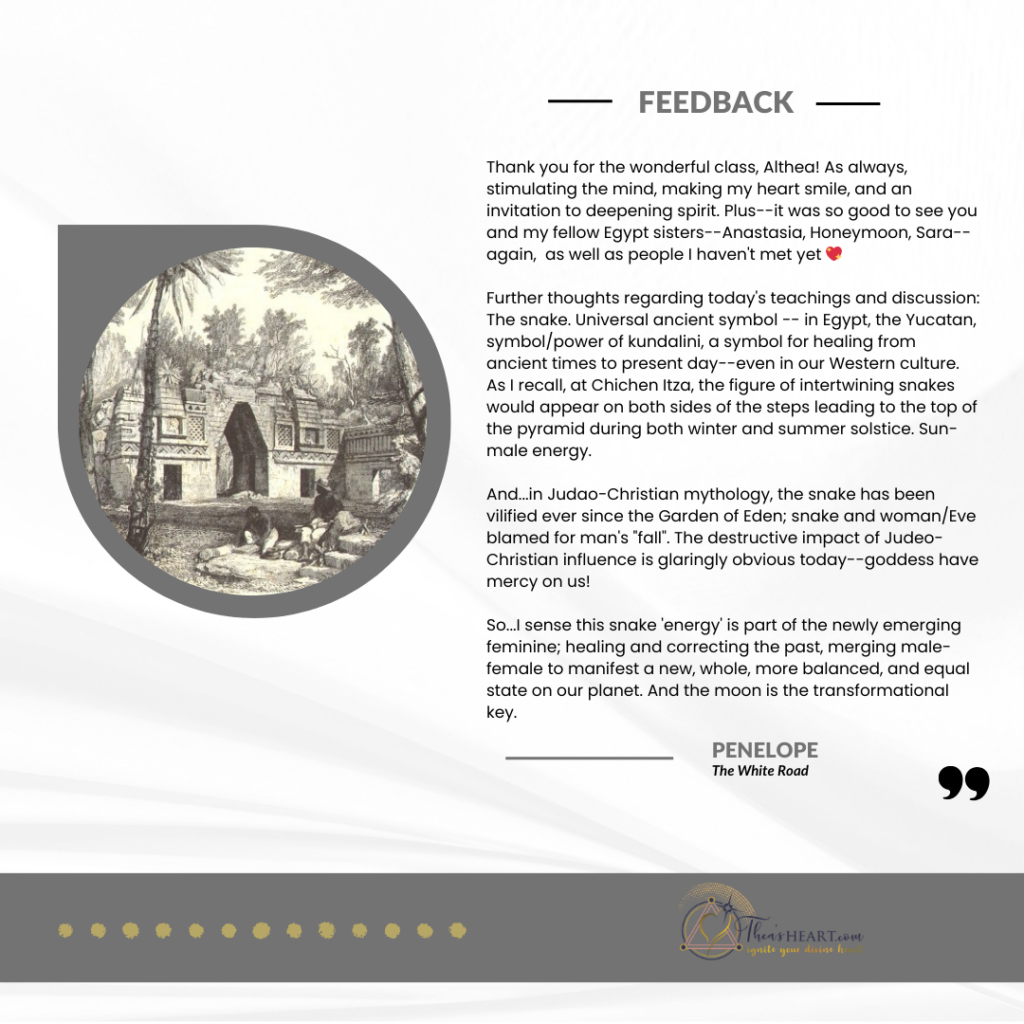
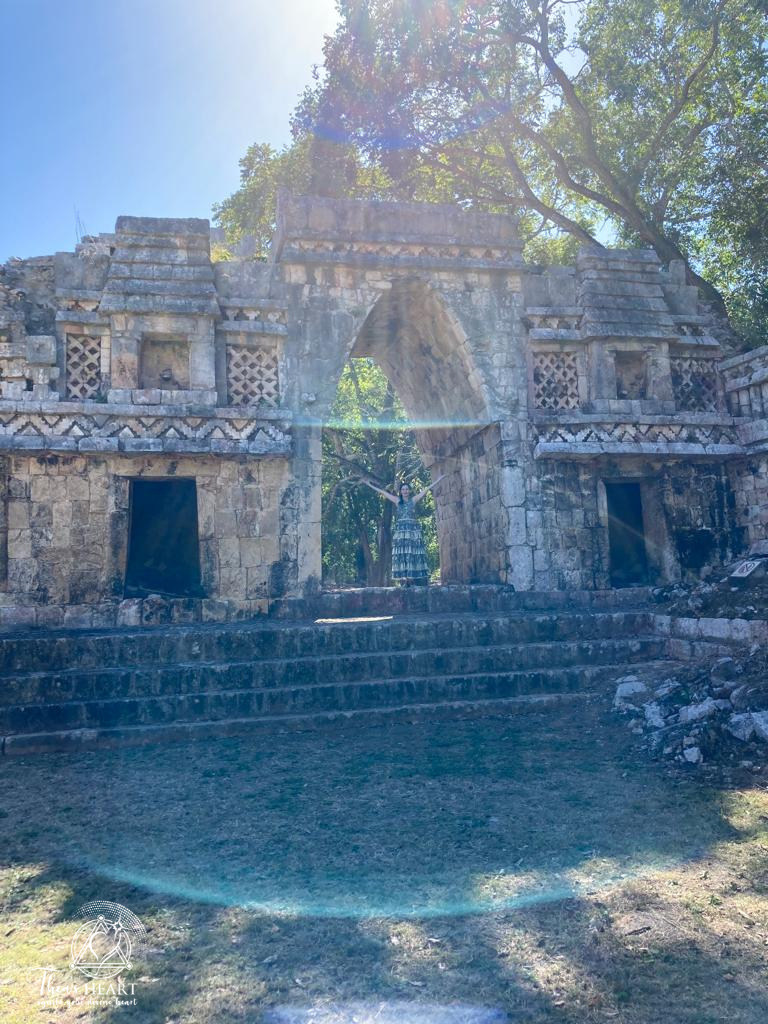
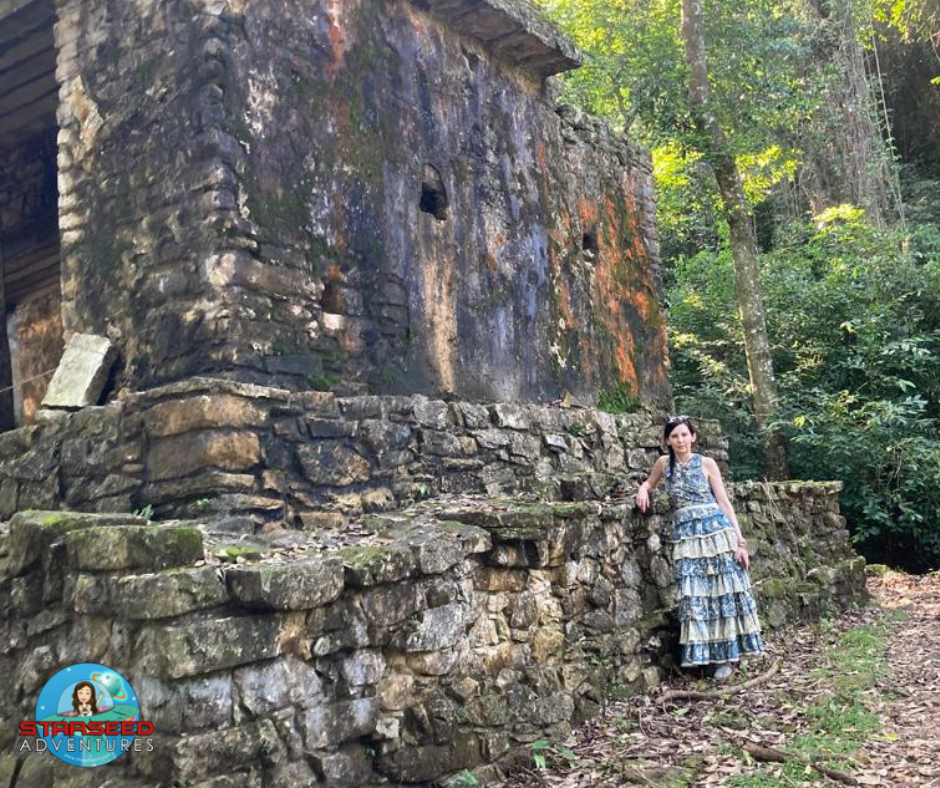
Triumphal arches project authority outward. Ancient pathways connected by arches drew communities inward, uniting them through shared ritual and cosmic alignment. In my course, I discussed Dzibchaltun in the Yucatán, and how the Temple of the Seven Dolls aligns with the sunrise during the equinoxes. Built upon the Mayan cross, it symbolized the ceiba tree — the axis mundi — connecting heaven, earth, and the underworld. Passing through that doorway as the sun rises connects you not only to this world but to the heavens. In the Puuc region of the Maya, monumental arches marked the ceremonial centers of Labná and Kabah, joined by a white road (sacbe) that connected them.
The Inca’s five great roads converged at Coricancha, the Temple of the Sun in Cusco, uniting the empire through both stone and sky. In Crete, the sacred way connected the Palace of Knossos to Amnisos. Everywhere, these paths remind us that causeways and entrances were also considered thresholds, not just monuments.

The White Road is a previously recorded course and available for purchase.
Personal Journeys Through Sacred Sites
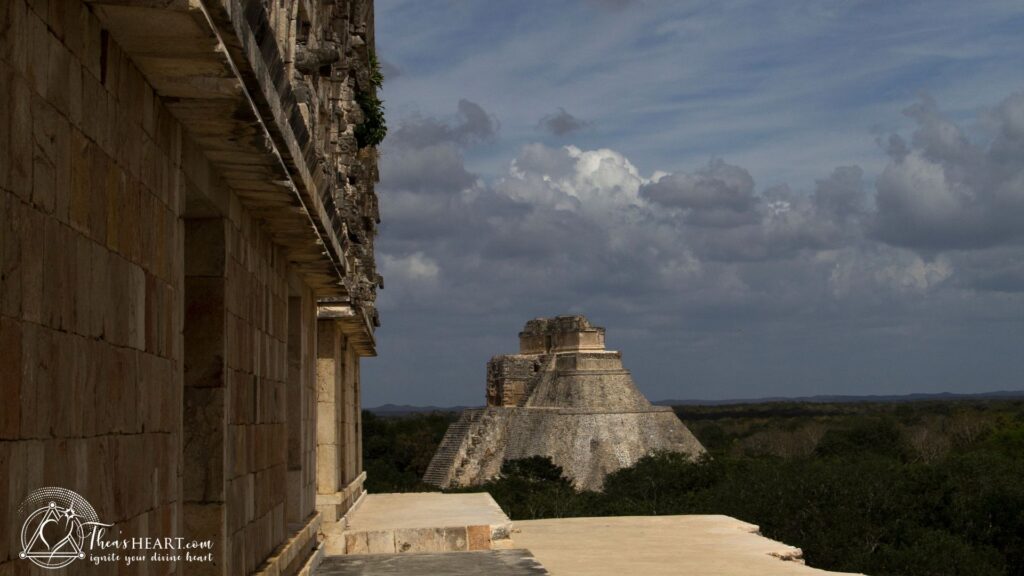
I have walked these roads myself. At Dzibchaltun, I crossed the threshold into a spontaneous remembrance of my time as a scribe, walking the causeways in ceremonial celebration. At Uxmal, I experienced the rise of a kundalini awakening near the Temple of the Magician. At the calendar stone by the Nunnery, in my minds eye, I saw a series of wide gates, stripped of ornamentation with a narrow path leading to a rotating Mayan calendar — a vision of time, cycles, and soul passage. As I wrote in “Outer Sight, Inner Sight” : the pathway is narrow, but the entrance is wide.
Why Arches Still Hold Power Today
So, when I hear about a modern triumphal arch, I see it as a continuation of the Roman and Napoleonic tradition of power and authority. Those first stones are always laid to commemorate who rules, who defines triumph, and who claims the right to shape collective memory.
And yet, monuments never hold a single meaning. What begins as a proclamation of authority could, in time, be reimagined as a reminder of connection, unity, or even mourning. The wheel of time reshapes consensus, and arches — whether Roman, French, or American — are always read anew by each generation.
Stone may proclaim power, but nature always has the last word.
Walking the Ancient Pathways
I have not only walked these ancient pathways myself — I have guided groups along them through our Starseed Adventures. These journeys are more than travel. They are initiations into the wisdom of the ancients, opportunities to walk in alignment with the rhythms of earth and sky, and to experience firsthand the gateways between worlds that our ancestors created.
- Egypt: We explored the Avenue of Sphinxes, stretching nearly 1.9 miles (three kilometers) from Karnak to Luxor Temple.
- Peru: We followed one of the five great Inca roads converging at Corikancha, the Temple of the Sun in Cusco.
- Mexico: We walked the Avenue of the Dead at Teotihuacan, the long ceremonial causeway linking the great pyramids.
- Crete: We traced the Minoan stone-paved road at Knossos — Europe’s oldest — built of sandstone and basalt, extending nearly 31 miles (fifty kilometers) across the island.
- France, Scotland, Ireland, and Malta: We explored Neolithic pathways and stone circles that still whisper of ancestral wisdom and stellar alignment.
✨ And we are not done yet. Our 2026 Starseed Adventures will launch soon.
If this exploration of arches, pathways, and ancient memory resonates with you, consider joining me on a future Starseed Adventure or exploring my course The White Road.
©2025 Thea’s Heart, LLC® – All Rights Reserved
Cite My Article
Provost, Althea. An Arch, So What? Stones, Symbols, and Power. Theas Heart, 24 Nov. 2025, https://theasheart.com/the-white-road-purchase-the-replay/.
Works Consulted
About. Harrison Design, https://harrisondesign.com/profile/about. . Accessed 24 Nov. 2025.
“Architect Promotes Renaissance of Traditional Catholic Architecture.” Catholic Herald, 2023, https://www.catholicherald.com/article/local/architect-promotes-renaissance-of-traditional-catholic-architecture/.
“Arc de Trump: Triumph and Downfall.” Hyperallergic, 7 Nov. 2024, https://hyperallergic.com/1050375/the-arch-of-trump-triumph-and-downfall/.
“Independence Arch: A Monument for America’s 250th Anniversary.” BBC News, 21 Nov. 2024, https://www.bbc.com/news/articles/cy7e8lv176go..
Provost, Althea. Outer Sight, Inner Sight. Theas Heart, 2025, https://theasheart.com/outer-sight-inner-sight/.
Provost, Althea. The White Road. Theas Heart, 2025, Online course replay, https://theasheart.com/the-white-road-purchase-the-replay/..
“Trump Unveils Plans for ‘Independence Arch’ at Dinner Thanking Donors of White House Ballroom.” YouTube, uploaded by [channel name], 2024, https://youtu.be/BokT2mRo8Lk?si=Sb9DizBG-uGFJ-6j.